


5 Documents You Need for a European Student Visa
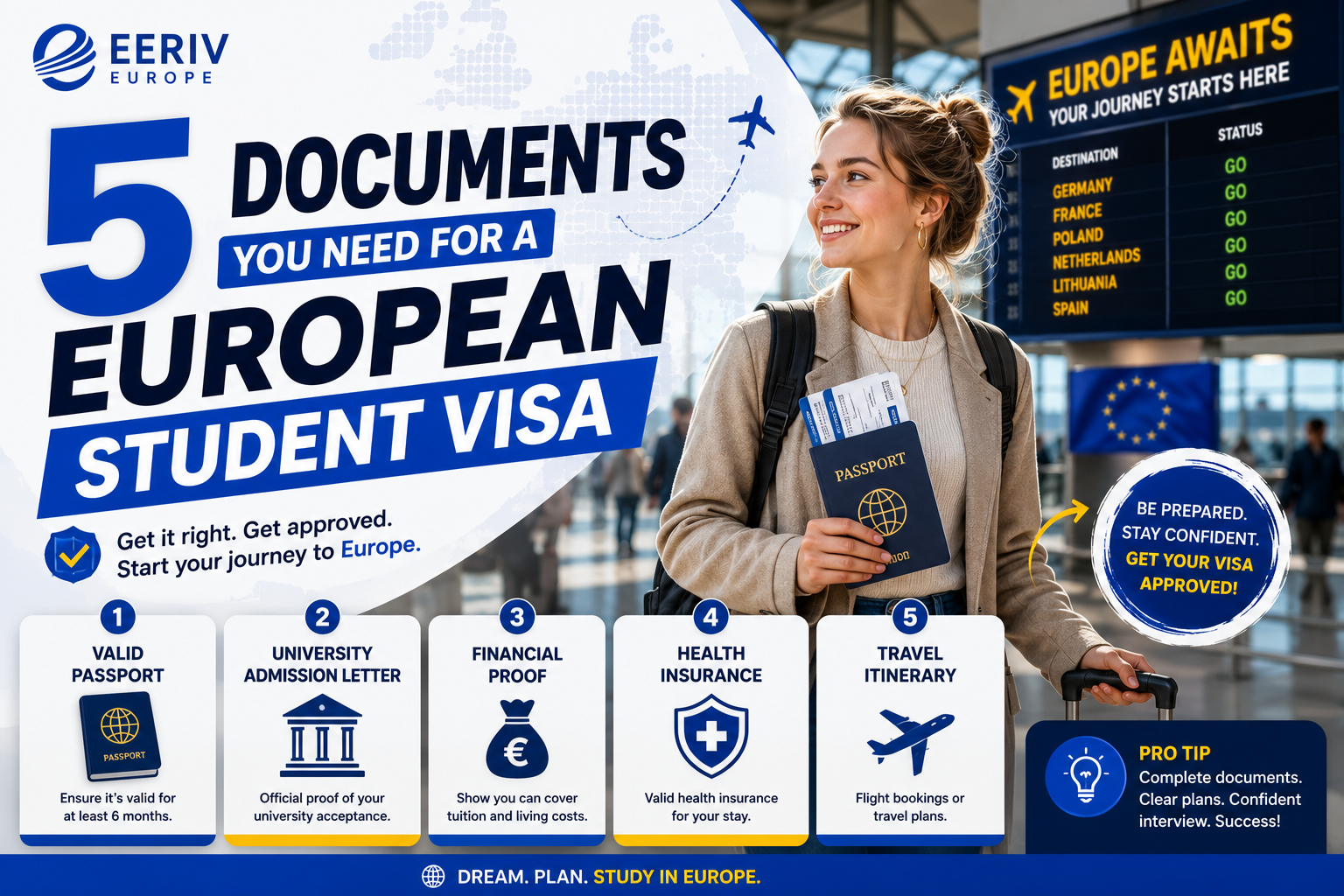
Planning to Study in Europe? Don’t Let Missing Documents Delay Your Visa
Getting accepted into a European university is an exciting milestone, but receiving your admission letter is only the beginning. Before you can start your studies, you’ll need to apply for a student visa. One of the biggest reasons visa applications are delayed or even refused is incomplete or incorrect documentation.
Every European country has its own visa requirements, but there are five essential documents that almost every international student will need. Preparing these documents early can make your visa application smoother and increase your chances of approval.
Let’s look at the five most important documents you need for a European student visa.
1. University Admission Letter
Your admission letter is the foundation of your visa application. It proves that you have been officially accepted by a recognized university or higher education institution in your chosen European country.
Your admission letter should clearly state:
- Your full name
- The name of the university
- The program you have been admitted to
- The duration of your studies
- The start date of your course
Visa officers use this document to confirm the purpose of your travel. Without an official admission letter, your student visa application cannot proceed.
2. Valid Passport
Your passport must remain valid throughout your intended stay and usually for several months beyond your expected graduation date.
Before applying, check that:
- Your passport has enough blank pages for visa stamps.
- It is not damaged.
- It does not expire soon.
If your passport is close to expiring, renew it before beginning your visa application.
3. Proof of Financial Support
European countries want to ensure that international students can support themselves while studying abroad.
Depending on your destination, acceptable proof may include:
- Personal bank statements
- Sponsor’s bank statements
- Scholarship award letters
- Sponsorship letters
- Blocked account confirmation (required in some countries)
The required amount varies by country, so always confirm the financial requirements for your destination before submitting your application.
4. Proof of Health Insurance
Many European countries require international students to have health insurance before a visa is issued.
Your insurance should typically cover:
- Emergency medical treatment
- Hospitalization
- Medical expenses during your stay
Some countries accept international insurance providers, while others require specific local or approved insurance plans. Ensure your policy meets your destination country’s visa requirements.
5. Visa Application Form and Passport Photographs
Every student visa application requires a completed application form together with passport-sized photographs that meet embassy specifications.
Take your time when completing the form:
- Ensure all information matches your passport.
- Answer every question honestly.
- Double-check dates and personal details.
- Sign the application where required.
Incorrect or incomplete forms can delay visa processing.
Bonus Documents You May Need
Depending on the country you’re applying to, you may also be asked to provide:
- Proof of accommodation
- Academic transcripts and certificates
- English language proficiency results (IELTS, TOEFL, or equivalent where required)
- Birth certificate
- Police clearance certificate
- Motivation letter
- Visa appointment confirmation
- Flight reservation (where requested)
Always review the specific requirements published by the embassy or consulate of your destination country.
Common Mistakes to Avoid
Many student visa applications encounter delays because applicants:
- Submit incomplete documents.
- Use outdated bank statements.
- Purchase insurance that doesn’t meet visa requirements.
- Provide inconsistent information across documents.
- Wait until the last minute to prepare their application.
Preparing everything well in advance gives you time to correct any issues before your appointment.
Final Thoughts
A successful European student visa application starts with proper preparation. Having these five essential documents ready before booking your visa appointment can save you time, reduce stress, and improve your chances of approval.
Remember that visa requirements differ between European countries, so always verify the latest requirements for your destination before applying.
If you’re unsure about the documents you need or want professional guidance throughout your admission and visa process, EERIV Europe can help you prepare a complete application from start to finish.
Frequently Asked Questions
What is the most important document for a European student visa?
Your university admission letter is the most important document because it confirms that you have been accepted to study at a recognized institution.
Do all European countries require proof of funds?
Yes. Most European countries require applicants to demonstrate they have enough financial resources to cover tuition fees and living expenses during their studies.
Is health insurance mandatory?
For most European student visas, yes. The insurance must meet the minimum coverage required by the destination country.
Can I apply for my visa before receiving my admission letter?
No. You generally need an official admission letter before submitting a student visa application.
Ready to Start Your Study Abroad Journey?
At EERIV Europe, we help students with university admissions, visa preparation, document review, and every step of the application process.
Contact EERIV Europe today and let our experts help you prepare a successful European student visa application.


Leave a comment